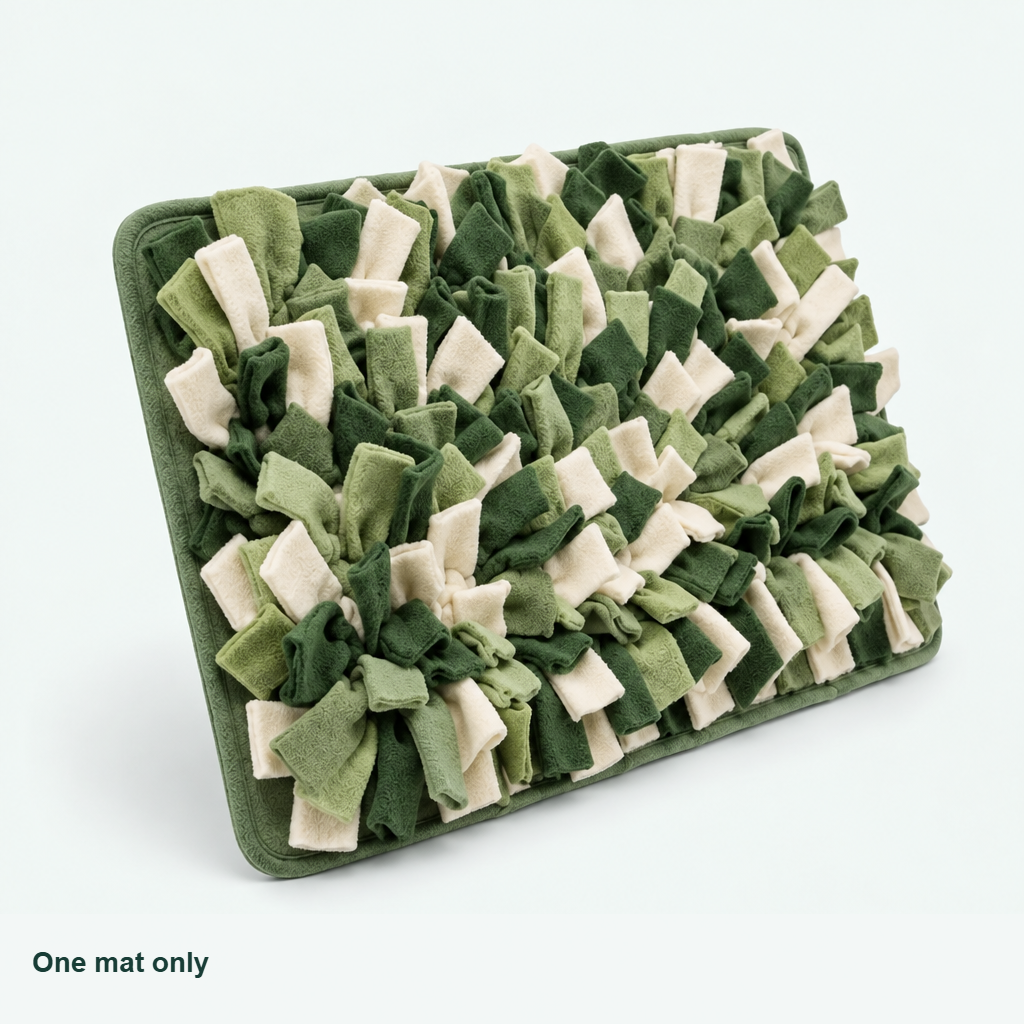
USLOOD® Dog Snuffle Mat for Nose Work and Slow Feeding
USLOOD® Dog Snuffle Mat for Nose Work and Slow Feeding
Couldn't load pickup availability

USLOOD® Dog Snuffle Mat for Nose Work and Slow Feeding
USLOOD®
USLOOD Dog Snuffle Mat for Nose Work and Slow Feeding
A flat fleece snuffle mat for calmer noses and slower meals.

The USLOOD Dog Snuffle Mat is a flat textile enrichment tool for indoor nose work and slower eating. Instead of rolling or bouncing, it stays spread out on the floor, letting a dog use its nose to root kibble or treats from layered fleece strips and hidden pockets.
This mat is designed for owners who want to add a quiet, engaging activity to their dog's day. It suits dogs who need mental stimulation, tend to eat too quickly, or benefit from a calming task that is different from a treat ball. The soft fleece surface and flat shape make it a practical addition to a living area floor.
Why a Flat Snuffle Mat Fits Quiet Enrichment
- Engages the nose rather than the paws. The flat, spread-out layout encourages a dog to sniff and root through layered fleece strips, which can be a focused alternative to treat balls that rely on rolling or pawing.
- Supports slower eating. Scattering kibble or treats across the mat gives a dog something to work through piece by piece, which can help stretch out mealtime for dogs who tend to gulp their food.
- Offers a calming indoor activity. Because the mat stays flat on the floor and uses the dog's natural foraging style, it can fit into quiet moments at home without needing a large space or active play.
- Simple to place and store. The mat lies flat in a living area and can be moved or rolled when not in use. Its textile form is intended for indoor floor use, making it easy to bring out for a session and put away afterward.

How to Set Up a Snuffle Session
- Place the mat flat on an indoor floor in a clear area. Let the dog investigate the fleece surface before adding food so the new texture and shape are not overwhelming.
- Scatter a small amount of dry kibble or treats across the layered strips and into the hidden pockets. Start with an easy scatter so the dog can succeed, then adjust the hiding as you learn what keeps the dog engaged.
- After the session, shake out loose crumbs and follow the care guidance that came with the mat. Store it flat or rolled in a dry place until the next use.

Everyday Moments for Nose Work and Slower Meals
Use it in a living room or other indoor floor area as a nose work station. Scatter dry kibble or small treats through the fleece strips and let the dog search at its own pace while you stay nearby.
Try it as a slow-feeding option for a dog that eats too quickly from a bowl. Portion part of a regular meal into the mat so the dog works for each piece instead of finishing in one go.
Bring it out during quiet or restless moments when a dog needs something to do. The flat mat gives a dog a calm, scent-based task that can be more settling than active toys.

Questions About Using a Snuffle Mat
Is this mat suitable for dogs who eat too quickly?
It is designed as a slow-feeding option because food is scattered through fleece strips rather than placed in a bowl. A dog works piece by piece, which can stretch out mealtime. Start with a small portion and watch how your dog manages the fabric layers.
What kind of treats work best in the snuffle mat?
Dry kibble and small, low-moisture treats are the most practical choices. They scatter easily through the strips and are less likely to leave sticky residue. Avoid large or greasy treats that could clump in the fleece or be difficult to shake out.
How do I introduce the mat to a dog that has never used one?
Place the mat on the floor and let the dog sniff it without food first. Then scatter a few easy-to-find pieces across the top. As the dog understands the activity, you can work food deeper into the layered strips and hidden pockets.
Can the mat be used for more than one dog?
Yes, but it is usually easier to give each dog its own turn so one dog does not guard the mat or rush through the food. If dogs share, supervise the session and separate them if either becomes possessive around the fabric or treats.